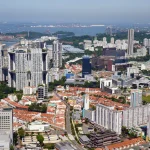
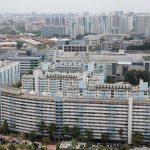


The Singapore property market in August 2025 reveals a landscape of recalibration. Following the volatile upswing post-COVID and the tightening measures introduced over the last two years, both the public and private sectors are seeing shifts in pricing, rental demand, and investor sentiment. Amid high interest rates and a cautious global economy, stakeholders are recalibrating expectations.
Here's a comprehensive breakdown of the current property landscape across all key segments:
1. Private Residential Market: Prices Soften but Demand Persists
Singapore’s private residential sector has been showing signs of consolidation. As of July 2025, private non-landed home prices dipped by 0.7%, marking the second consecutive month of decline, according to the latest URA flash estimates.
- The Core Central Region (CCR) continues to see tepid demand, especially for luxury condominiums. With high ABSD rates on foreign buyers and elevated interest rates, high-end units are struggling to attract investors.
- In contrast, Outside Central Region (OCR) and city-fringe locations (RCR) are faring relatively better, buoyed by a growing pool of upgraders and local buyers.
- New launches have moderated in pricing, focusing on affordability and value-added amenities to attract cautious buyers.
- Projects near MRT lines, top schools, and integrated developments still garner healthy interest.
Overall, while buyer activity has declined, the correction appears controlled and not indicative of a crash.
2. Rental Market: Stabilisation After a Boom
Singapore’s rental market, which soared during 2022–2023 due to supply constraints and high demand, is now stabilizing:
- Private rentals have started to soften, especially in the prime districts where new completions have added supply to the market.
- The HDB rental market, however, remains resilient. Demand continues to be strong from foreign professionals, new permanent residents, and expats seeking more affordable options.
- The URA’s data indicates that overall rental prices have plateaued in the last quarter, and landlords are beginning to moderate expectations.
The entry of thousands of new BTO and private units is easing the strain, and this trend is expected to continue through Q4 2025.
3. Interest Rate Effects: Financing Remains Costly
Mortgage rates are holding firm above 3.5%, as central banks around the world combat inflation. The Monetary Authority of Singapore (MAS) has kept a close watch on domestic lending conditions.
- The higher borrowing cost has significantly impacted affordability, especially for younger buyers and investors relying on leveraged financing.
- Many prospective buyers are adopting a wait-and-see strategy, postponing purchases in hopes of better financing options or falling prices.
- Some homeowners with floating-rate packages are refinancing or shifting to fixed-rate options, even with limited savings.
Unless there’s a significant easing in global financial conditions, mortgage rates are expected to remain high for the rest of the year.
4. Policy Influence: No New Cooling Measures, But Effects Linger
While no new cooling measures were introduced in August 2025, the aftershocks of the April 2023 ABSD hike continue to ripple through the market.
- Foreign investment in residential property remains subdued.
- Developers are more risk-averse, submitting conservative bids for Government Land Sales (GLS) plots.
- Smaller en bloc deals and collective sales are failing to materialize, as developers find it harder to justify high land costs.
There is growing speculation that if demand continues to weaken, the government may consider adjusting some measures to support genuine home buyers without reigniting speculative activity.
5. Buyer Sentiment: Stable but Selective
Despite price fluctuations and policy headwinds, long-term buyer sentiment remains resilient:
- Singapore continues to be seen as a safe and desirable property market due to its political stability, efficient infrastructure, and limited land supply.
- Sustainability and smart-home features are now top priorities for buyers, alongside traditional factors like location and connectivity.
- First-time homebuyers and HDB upgraders remain active but cautious, taking longer to make decisions and focusing more on financing conditions.
Real estate agents report that buyers are spending more time comparing projects and are more sensitive to price differences than in previous years.
Market Outlook: What Lies Ahead for the Rest of 2025?
The outlook for the remainder of 2025 is one of stabilization and cautious optimism:
- Price Trends: Prices are expected to stabilize or see minor adjustments as the market finds equilibrium.
- Rental Market: A gradual softening is likely, especially in private residential segments, while HDB rental demand should remain firm.
- Transaction Volume: Sales volume may remain muted unless there's a drop in interest rates or a major policy shift.
- New Launches: Developers will proceed cautiously. Prime locations will see continued launches, but fringe and suburban projects may be delayed or phased out slowly.
- Government Policy: No major announcements are expected, but attention will be paid to signals from MAS and URA regarding future supply and regulation changes.
Conclusion
The Singapore property market in August 2025 reflects a mature and evolving landscape—not overheated, but not slumping either. As stakeholders adjust to high interest rates, earlier cooling measures, and the influx of new supply, the market appears to be entering a phase of healthy correction and consolidation.
For buyers and investors, this presents an opportunity to enter the market strategically—by focusing on value, location, and long-term holding potential. Meanwhile, sellers and developers must be more competitive and transparent in their offerings.
In this environment, knowledge and timing are key. Staying updated with URA data, government announcements, and expert insights will empower stakeholders to make well-informed decisions in the months ahead.

Other Articles

Government Land Sales (GLS) Update – August 2025