
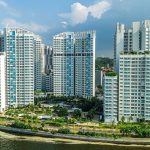


A four-bedroom unit at New Futura, a freehold luxury condominium in the River Valley district, was resold at a staggering S$2.15 million loss. The transaction has captured market attention—not just because of the meaty markdown, but also due to its connection to a prominent money laundering case.99.co
Key Background Details:
- The unit was associated with Chen Qingyuan, one of the ten foreign nationals arrested in Singapore’s major S$3 billion money laundering probe.EdgePropThe Straits Times
- Chen had purchased the unit in May 2018 for S$10.15 million (approx. S$3,772 psf).EdgeProp
- The resale reflected a loss of S$2.15 million, highlighting both the inflated entry price and distress-linked market forces.99.co
- However, industry analysts advise that this fire‐sale should not be taken as indicative of the broader CCR luxury condo market—other comparable properties have delivered robust gains, with one Orchard 4-bedroom unit, for instance, fetching a S$3.08M profit in July 2025.99.co
Why This Case Stands Out
1. Money Laundering Fallout
The New Futura transaction is directly tied to law enforcement action against illicit asset ownership. Chen Qingyuan’s involvement puts the unit in the spotlight amid Singapore’s intensified crackdowns on white-collar crime.The Straits Times+1EdgeProp
2. Market vs. Distress Dynamics
The loss was propelled more by forced divestment and legal circumstances than by weak property fundamentals. As 99.co notes, once this isolated case is stripped out, the CCR luxury market remains strong with solid capital gains in other segments.99.co
3. Investor Sentiment and Market Resilience
While this unit lost significant value, broader data suggests continued demand for CCR homes—for instance, properties in Orchard achieved substantial resale profits in the same period.99.co
4. Policy & Due Diligence Ripple Effects
This incident underscores how legal actions surrounding money laundering can ripple into property markets—heightening calls for stricter due diligence from agents, lawyers, and developers.
Introduction
In a remarkable example of how legal issues can intersect with real estate, a luxury New Futura condo in River Valley was resold at a staggering S$2.15 million loss—all tied to its ownership by a money laundering suspect. Chen Qingyuan, one of ten foreigners arrested in Singapore’s massive S$3 billion money laundering case, purchased the four-bedroom unit in May 2018 for S$10.15 million. When the property re-entered the market, it fetched a much-lower price, prompting questions about pricing, reputation, and the resilience of Singapore’s high-end property segment.
While the loss is headline-grabbing, analysts urge caution: this appears to be a distress sale, not a sign of market rout. And indeed, elsewhere in the Core Central Region, luxury condos continue to command premium appreciation—even as markets digest regulatory and legal shocks.
Background & Context
The New Futura unit, measuring approximately 2,691 sq ft on the 24th floor, was purchased by Chen Qingyuan in May 2018 for S$10.15 million—about S$3,772 per square foot.EdgeProp His link to the now-infamous S$3 billion money laundering case meant that this asset was placed under scrutiny, culminating in a resale at significantly lower value—a rare occurrence for the CCR market.99.coThe Straits Times
Singaporean property commentators, including those from 99.co, caution that although the loss is eye-catching, it was shaped largely by reputational risks, forced liquidation, and a high entrance price—not market fundamentals. In fact, July 2025 saw a more typical scenario where a four-bedroom unit in Orchard achieved a S$3.08 million profit after just six years—reflecting sustained interest and confidence in CCR residences.99.co
Financial Impact & Market Lens
The resale represents a 21% drop from Chen’s original price—assuming S$10.15 million to roughly S$8 million sale. While this is a substantial markdown, the transaction is not an accurate gauge of CCR’s health. In fact, it stands as an exception driven by external forces, such as legal encumbrances and market perceptions.
In the broader CCR market, condo prices remain buoyant. Recent profitable transactions in premium locales, far beyond River Valley, reinforce investor confidence. This supports the notion that isolated, distress-linked sales do not necessarily reflect broader trend reversals.
Legal & Policy Implications
This case underscores how financial crime enforcement can directly affect high-end real estate. Authorities continue to use prohibition-of-disposal orders, seizures, and forced asset forfeitures to track illicit money flows.The Straits Times+1The Business Times
The fallout has prompted real estate professionals to strengthen due diligence practices. With enhanced anti–money laundering (AML) frameworks, agents are legally bound to verify buyer identities and reporting suspicious activity—a mission-critical shift for safeguarding market integrity.
Even developments such as Canninghill Piers have seen units frozen mid-construction due to links with suspects—raising payment recovery and contractual questions for developers.The Business TimesTODAY
Conclusion
The S$2.15 million loss at New Futura serves as a cautionary highlight—showing how legal entanglements, reputational risk, and forced exits can overturn market logic, even in prime CCR locations. Yet, this appears to be an anomaly, not an indicator of systemic weakness.
Singapore’s luxury property market remains fundamentally robust, powered by strong location appeal, buyer confidence, and tight government-led supply control. However, this case emphasizes the need for continued vigilance, transparency, and regulatory oversight to maintain trust in one of the region’s most high-stakes real estate markets.