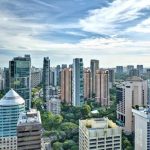
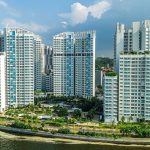


The Singapore property market in 2025 continues to attract strong local and foreign interest. With a balanced mix of new private launches, resilient HDB resale prices, and steady rental growth, Singapore remains one of Asia’s most stable real estate destinations. This year, we’re witnessing significant shifts in buyer preferences, government cooling measures taking effect, and evolving trends across residential, commercial, and industrial sectors.
Let’s dive into the latest property market trends in Singapore for 2025, exploring key factors shaping the market and what to expect in the coming months.
1. Overall Market Sentiment: Stability with Moderate Growth
Despite global economic uncertainty, Singapore’s real estate sector has shown remarkable resilience. According to recent data from the Urban Redevelopment Authority (URA), private home prices rose by around 3.5% year-on-year in Q3 2025, while transaction volumes slightly eased compared to 2024.
Buyers remain cautious yet optimistic, especially first-time homeowners and investors looking for long-term value. The government’s cooling measures, such as higher Additional Buyer’s Stamp Duty (ABSD) for foreigners, continue to moderate speculative demand, ensuring a stable growth trajectory.
2. Private Condominium Market: Sustainable Price Momentum
The private condo segment has seen consistent demand, particularly for mid-tier and suburban developments. New launch projects in areas like Tampines, Lentor, and Jurong Lake District have performed well, driven by lifestyle amenities and improved connectivity.
Developers are offering attractive early-bird discounts and flexible payment plans, which have encouraged genuine buyers to enter the market. While prime locations like Orchard and Marina Bay continue to see luxury investments, suburban condos are leading in sales volume due to affordability and accessibility.
Key Trend:
→ Average new launch prices have reached around S$2,200 to S$2,600 per square foot (psf) in 2025, up by about 4% from last year.
3. HDB Market: Resale Prices Reach New Heights
The HDB resale market remains hot in 2025, with average resale prices climbing another 2% to 3% in the first half of the year. Demand continues to be driven by young couples, upgraders, and families seeking larger living spaces.
Even as more Build-To-Order (BTO) projects are being completed, the supply-demand imbalance persists, especially for popular estates such as Tampines, Bishan, and Toa Payoh. Million-dollar HDB flats have become more common, signaling sustained confidence in public housing value.
Key Trend:
→ More than 70% of resale transactions in 2025 involved flats that are over 10 years old, showing that mature estates still dominate the market.
4. Rental Market: Demand Remains Strong
Singapore’s rental market continues to thrive, supported by foreign professionals, students, and digital nomads. The rental index rose by approximately 6% year-on-year, following a surge in demand for centrally located and city-fringe properties.
The return of international business travel and the rise of hybrid working arrangements have influenced tenant preferences. Many renters now prioritize properties near MRT lines, coworking spaces, and lifestyle hubs.
Key Trend:
→ Average monthly rent for a 2-bedroom condo unit stands around S$4,500 to S$5,000, depending on location.
5. Government Land Sales (GLS) and New Launches
The Government Land Sales (GLS) program in 2025 has introduced several prime residential and mixed-use plots. Areas like Punggol, Queenstown, and Chuan Lane are among the most talked-about sites, hinting at future growth corridors.
New launches under GLS are expected to reshape urban living by offering integrated developments combining retail, residential, and green spaces. These projects align with Singapore’s long-term “Live, Work, Play” vision for sustainable communities.
Key Trend:
→ Upcoming GLS projects are expected to launch at prices starting from S$1,900 psf, attracting both local upgraders and overseas investors.
6. Commercial and Industrial Property Trends
The commercial property sector is undergoing transformation as flexible office spaces and business parks gain traction. Demand for Grade A office space in the Central Business District (CBD) remains stable, with rental rates showing mild recovery after a soft period in 2024.
The industrial sector is another bright spot, driven by logistics and high-tech manufacturing. Warehousing demand from e-commerce and data centers continues to boost the industrial property market.
Key Trend:
→ Industrial property rentals rose by around 5% in 2025, supported by growth in logistics and semiconductor industries.
7. Sustainability and Green Building Demand
Green-certified buildings and energy-efficient homes are becoming mainstream. Buyers are increasingly conscious of sustainability and prefer developments with solar panels, smart energy systems, and eco-friendly amenities.
Developers are responding by integrating green roofs, rainwater harvesting, and carbon-neutral construction materials into their designs — aligning with Singapore’s Green Plan 2030.
8. Foreign Investment Outlook
Although foreign purchases slowed slightly due to higher ABSD, Singapore remains a safe-haven market for global investors. Interest from China, Malaysia, India, and the U.S. continues, particularly in luxury condominiums and commercial assets.
Singapore’s political stability, strong currency, and transparent property laws make it an ideal choice for long-term capital appreciation.
Key Trend:
→ Foreign buyers now account for around 7% of total private property transactions, showing sustained interest despite regulatory curbs.
9. 2025 Outlook: Balanced Growth Ahead
The outlook for Singapore’s property market in the remainder of 2025 is positive yet measured. Analysts expect moderate price growth of 3–5% and a steady increase in new project launches.
Government measures, coupled with continued economic growth and infrastructure expansion, will ensure that Singapore’s property sector remains one of the most resilient globally.
Conclusion
Singapore’s 2025 property market is defined by stability, sustainability, and selective growth. Whether you’re a first-time homebuyer, upgrader, or investor, the key lies in understanding market dynamics, timing your entry, and focusing on long-term value rather than short-term gains.
With continued government support, urban development projects, and strong rental demand, Singapore’s real estate landscape remains one of the safest and most promising in Asia.

Other Articles